Cassandra Varricchio-Teaching Portfolio
EVIDENCE SET 2
Planning and teaching for effective learning
CONTEXT
Today’s educational landscape is intricate and multifaceted, requiring educators to adapt curricula, integrate social and emotional learning, and tailor instruction to suit an increasingly diverse student population (Johnson & Johnson, 2014). Effective instruction in teaching, resulting in genuine and significant student progress, is the epitome of successful education (Hattie, 2012). As a teacher a critical component of effective teaching is effective lesson planning (Zazkis et al., 2009). In embracing a holistic approach to teaching, I ensure that I am recognising the diversity of my student cohort, emphasizing their physical, social, personal, and emotional well-being in my planning process. Within my classroom I aim to foster growth oriented lifelong learners that are able to thoroughly understand the curriculum and the concepts and topics within it (Ambrose et al., 2010).
ACTION
1. Implementing and planning effective teaching and learning
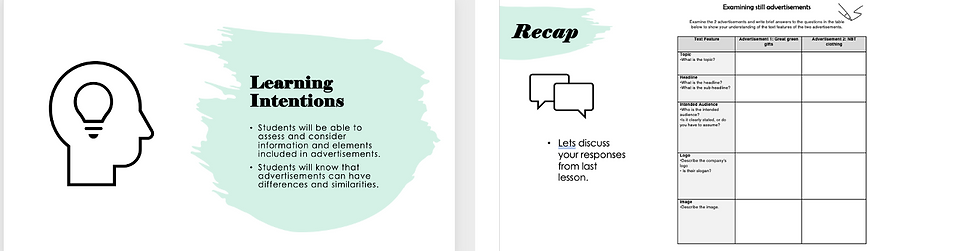
My focus while developing unit and lesson plans is ensuring that they are equitable, engaging, and targeted to the needs and abilities of my students. In my teaching, I have prepared units and lesson plans on a variety of subjects, but I would like to solely focus my English unit for this discussion. Prior to starting the creation of this unit, I collected prior English assessments (Figure 1) from students in Term 1 as well as DIBLES, ORF and MAZE testing data from the beginning of the year (Figure 1.2). With this information, I was able to identify, in collaboration with school leadership, that the cohort of students I was working with were at year 4 level in English. Using this information, I then created a unit that was at year level but one that my students were able to learn from and engage with. After creating the unit with numerous lesson plans, I was able to consult with other school team members who worked with the same year level of students to get their feedback on what I had prepared. Knowing my students, I also understood that the daily lesson slides would need to rely primarily on visuals and be structured the same for every lesson in order to meet their learning needs and would be beneficial for their learning and aid me greatly when giving explicit instruction (Figure 1.3). I also ensured that students would have a daily visuals timetable up on the whiteboard (Figure 1.4) along with the beginning structure of daily lesson slides starting with Learning Intentions and a Recap slide (Figure 1.5 & 1.6) this to explicitly explain to students the learning intentions for any given lesson as well as the opportunity to discuss last lessons learnings and for me as the teacher to gain insight into how they are progressing with their learning throughout the unit and make potential changes where necessary. After observing my students in the first couple lessons of the unit I saw they found it hard to track between the advertisement’s examples on the board and back to their work. With this I decided to print the remaining advertisements examples I would need for the unit and laminate them so the students could share 1 between 2 (Figure 1.7). I also observed the difficulty my students had in completing task sheets without writing lines and how their work would often appear untidy, or words would be written all over their task sheet (Figure 1.8). For this reason, I then edited all the future worksheets in the unit to include writing lines (Figure 1.9) this seemed to alleviate this concern with one student even stating that the found it easier to complete the task with the inclusion of the writing lines.





2. Assessing & Providing Feedback
Due to my strong emphasis on organisation in my teaching practice, I ensured that my unit plans and assessment activities were completed prior to commencing my teaching. Once completed I also sought guidance from my Mentor and other staff members to ensure that my assessments would successfully guide students in documenting their progress and allow all my students to have the best possible chance at being successful in regard to the assessments. I incorporated a range of formative and summative assessment techniques in my teaching such as, creating rubrics, assessment plans and exit tickets (Figure 2) that align with the learning objectives and curriculum requirements. In designing the rubric for this particular unit, I used information and feedback I had gathered from student’s pervious work samples, prior knowledge assessments, informal feedback, note taking and evaluation of their final assessment plan and rubric. With this I was then able to grade the student’s final assessment with use of the rubric I had created and then moderated their final grades with my Mentor (Figure 2.1). In addition to giving students written feedback I also had the opportunity to sit with the students individually and give them verbal feedback and discuss their grade. Before doing so I understood the importance of needing to give my students growth-oriented feedback as many of them had a fixed mindset when it came to education. So before giving them verbal feedback I did research on how to best give growth-oriented feedback. To do this I ensured that when giving feedback I would give comments based on the students process or progress of completion rather than commenting on any personal attributions to their work, this a method suggested by Brock & Hundley (2018) to be an effective way of ensuring you are giving growth-oriented feedback (Figure 2.2). With this I also employed the using of the feedback sandwich in my written feedback to ensure I was giving constructive feedback sandwiched between two compliments, so my students wouldn’t be discouraged in completing future assessments (Molloy & Boud, 2014).


RESULTS
Overall, I was very impressed with students’ individual academic growth and the class’s academic growth specifically on the subject area of English. The students' high level of engagement and active participation was evident as majority of students achieved high grades (Figure 2.3). The final assessment pieces students presented showed he level of understanding and the high readiness students had in preparation of the task. Students were able to use their advisement plan and rubric to guide them to ensure successful creation and completion of their English assessment (Figure 2.4 & 2.5). With their final assessments showing that student had understood and applied all topics and concepts learnt in the unit to their assessment to create the best possible grade for themselves (Figure 2.6). Data gathered at the end of the unit also shows the improvements students made on their DIBLES ORF and MAZE assessments (Figure 2.7). With my Mentor attributing this improvement to the implementing and planning oof effective teaching and learning I demonstrated throughout my teaching (Figure 2.8).


Evaluation
Overall, I am pleased with my abilities in planning and organising teaching in an effective manner that fosters students learning. During my teaching feedback and comments given from by Mentor and school leaderships have consistently highlighted my abilities in going above and beyond to tailor my unit and lessons to meet the varying readiness levels and needs of my students. Collaborating with my Mentor and other staff members at the school and using feedback given to adapt my teaching facilitated further growth in my planning abilities that helped to establish a solid foundation for my classroom environment during my teaching. Throughout my teaching I was able to give prompt, growth-oriented feedback to students on all assessments and task they completed in a variety of methods that included written and verbal. As well as explicitly explaining tasks and the final assessment rubric at the beginning of numerous lessons using visuals aids on my Power Point slides to ensure students success in the unit. This consistency supported my Mentor in interpreting my assessments, enabling constructive feedback and assistance in moderating grades. Moving forward, I aim to gain further experience in documenting students’ learning outcomes to evaluate the efficacy of my planning and teaching methods. I also aspire to enhance my proficiency in creating rubrics to streamline the grading process as wells as incorporating methods of communication that allow for parents and caregivers engagement in the education process.
AITSL STANDARDS
1.1 Physical, social, and intellectual development and characteristics of students
Through accessing student data, I was able to plan for effective teaching and learning.
1.2 Understand how students learn
By understanding how my students learn best through, use of visuals and explicit explanation I was able to effectively scaffold my planning and teaching.
1.5 Differentiate teaching to meet the specific learning needs of students across the full range of abilities
I was able to collect data that informed my planning and facilitated group work. As well as successfully scaffolding tasks according to the needs of my students.
2.1 Content and teaching strategies of the teaching area
I provided my students with tasks that could be broken down into manageable sizes and presented difficult concepts with help of visual aids to assist with this.
2.2 Content selection and organisation
I was able to implement different assessment strategies being formative, summative and pre assessment, throughout my teaching and select content relevant to my students when necessary.
2.3 Curriculum, assessment, and reporting
I was able to collect data through the various assessments I had implemented and was able to seek advice from colleagues through written and verbal feedback on my teaching.
2.5 Literacy and numeracy strategies
Created resources that provided students with ‘hands on’ experiences and used my observations of students work along with discussions with students to inform future teaching and learning.
2.6 Information and Communication Technology (ICT)
I was able to effectively use Power Point slides to help explicitly explain task and lesson content for my students in a more engaging manner. Students were also allowed to use classroom computers and Microsoft Word to complete their final English assessment.
3.1 Establish challenging learning goals
This was achieved through incorporating daily learning intention slides into the beginning of the lessons and explicitly explaining this for students, so they were aware of the expectation and outcome of the lesson.
3.2 Plan, structure, and sequence learning programs
Through constructing ‘hands on’ materials for students to use and aid in their completion of tasks as well as using student feedback to inform future planning, such as the inclusion of writing lines for future task sheets.
3.3 Use teaching strategies
I used a variety of teaching strategies such as inquiry methodology through questioning of students which can be seen on my slides as well as the recapping of prior knowledge at the beginning of every lesson and inclusion of pre-assessments in the unit.
3.4 Select and use resources
Using PowerPoints, smartboard and visuals to complete learning tasks and create resources for lessons to help aid my teaching. Allowing students to use classroom computers to complete their final assessment.
3.5 Use effective classroom communication
My use of the daily timetable on the whiteboard communicated to all students the daily routine and what they can expect for the day.
3.6 Evaluate and improve teaching programs
Through feedback back given from colleagues as well as using data collection to improve teaching and evaluate learning.
4.1 Support student participation
Through the use of structuring of tasks to be more manageable and visual for my students along with understanding the different needs of my students and tailoring task, such as the incorporation of visuals and different teaching and assessment strategies.
4.2 Manage classroom activities
This was achieved by the use of visual timetables and consistent routines in lesson structure and content with assistance of my Power Point slides.
5.1 Assess student learning
My ability in creating multiple assessment and giving feedback to student on their work provides evidence for this standard. Along with the recording of assessment results and the creation of the assessment marking scheme.
5.2 Provide feedback to students on their learning
Using different methods of providing feedback to students on their learning such as written and verbal throughout the course of my teaching.
5.3 Make consistent and comparable judgments
This thought the implementation of the assessment rubric which assisted me in my determination of students grades along with the multiple other assessments students had completed in the unit.
5.4 Interpret student data
In using data collected to determine future planning and teaching based on results achieved by students on assessments such as DIBLES ORF and MAZE.
6.3 Engage with colleagues and improve practice
Formal written feedback received from leadership regarding my teaching, planning and participation in assessments and data collection.
References
Ambrose, S. A., Bridges, M. W., DiPietro, M., Lovett, M. C., & Norman, M. K. (2010). How learning works: Seven research-based principles for smart teaching. Jossey-Bass.
Brock, A., & Hundley, H. (2018). In other words: Phrases for growth mindset: A teacher's guide to empowering students through effective praise and feedback. Simon & Schuster.’
Hattie, J. (2012). Visible learning for teachers: Maximizing impact on learning. Routledge
Johnson, D. W., Johnson, R. T., & Holubec, E. J. (2014). Cooperation in the Classroom (9th ed.). Interaction Book Company.
Molloy, E. K., & Boud, D. (2014). Feedback models for learning, teaching, and performance. Handbook of research on educational communications and technology, 413-424.
Zazkis, R., Liljedahl, P., & Sinclair, N. (2009). Lesson Plays: Planning Teaching versus Teaching Planning. For the Learning of Mathematics, 29(1), 40–47. JSTOR.
Teaching Portfolio - Cassandra Varricchio